

I've always loved sport. Not just the physical challenge, but the feeling of being part of something greater than myself.
At school, I was the fill-in for just about every sport going! Hockey, netball, basketball — if a team needed someone, I was usually there. But rowing became my real passion.
I loved the focus it demanded, the commitment, the teamwork and the opportunity to discover what I was capable of. There is something incredibly satisfying about pushing yourself beyond what you thought possible — running a little further, going a little faster or achieving something others perhaps didn't expect you to.
Sport gave me a sense of belonging. When life felt chaotic during high school, the many sporting activities I was committed to gave me structure, purpose and a place where I felt I belonged. I loved the encouragement of teammates, the cheers from the sidelines and the shared experience of working towards something together.
Later, as a young mum, I found myself feeling a little lost and disconnected from the person I had been. Returning to the gym gave me something important: my confidence. I began to feel capable again, not just within the family home, but as an individual with my own goals and ambitions.
That experience reignited my passion for pushing myself. Running became a new challenge. First 10 kilometres, then 20, and eventually 41 kilometres.
Each time I reached a new milestone, I discovered that I was capable of more than I had previously believed.
And that is one of the greatest gifts sport has given me: the understanding that our limitations are not always where we think they are.
The crew must move as one
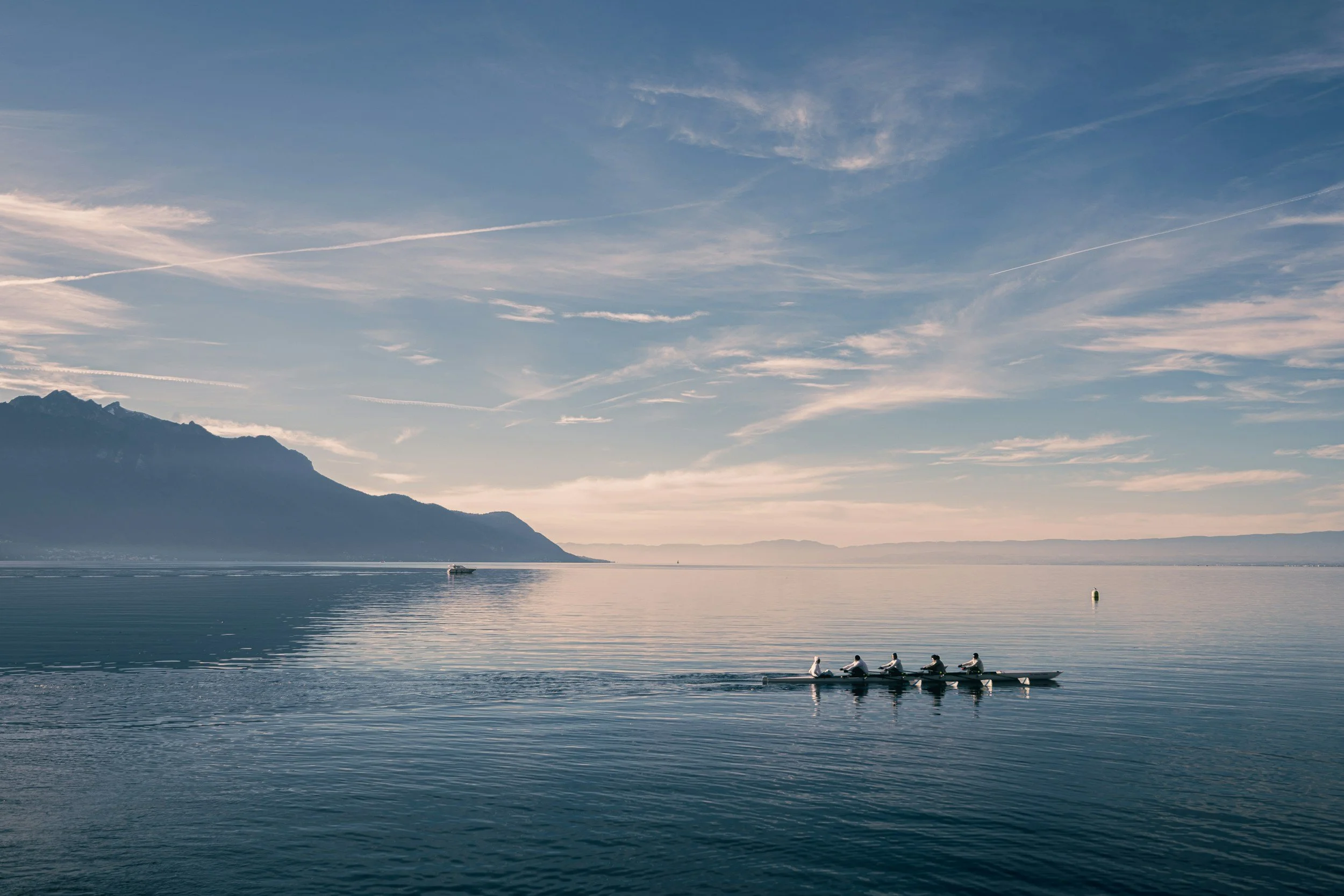
Rowing taught me some of the most valuable lessons about life.
It is an incredible sport. It requires focus, dedication, timing and trust. A crew must move as one. If everyone is pulling at a different time or working against the rhythm of the boat, it jerks through the water instead of gliding smoothly.
Every person has a role. Every person has a responsibility. And everyone needs to show up.
During the season, there are only a handful of opportunities to race, which means a lot of training in between. We would train up to four times a week, often early in the morning. There is a great deal of repetition involved in perfecting your technique and learning to work together.
And here's something important: if you don't show up, sometimes nobody gets to row. Your crew relies on you.
You quickly learn that your commitment isn't just about your own performance. It affects everyone.
You need to know your role, trust the people around you and understand when to work together, when to push and when to respond to what the team needs.
I think this is one of the most overlooked aspects of personal development. We can become so focused on improving ourselves that we forget we are part of something much bigger.
We don't live in isolation. We are family members, friends, colleagues, community members and contributors to the world around us. How we show up matters. How we work together matters. And the qualities we develop within ourselves influence what we bring to the people around us.
Training your mind — and recognising what holds you back
One of the biggest lessons I learnt through endurance training was that a huge part of physical performance happens in the mind.
When you're running a long distance or pushing through a difficult training session, you need to prepare yourself for the moment things get uncomfortable.
The body begins to tire, and the mind starts offering you reasons to stop. It tells you that you've done enough, that this is too hard, that you could always finish tomorrow.
But when you understand that this moment is coming, you can prepare for it.
You begin to recognise the difference between genuine physical limits and the internal voice that wants to keep you comfortable. You discover that you can often continue when your mind has already decided you're finished.
And the interesting thing is that this voice doesn't only appear during exercise.
It might tell you not to train because it's too cold. It might tell you that now isn't the right time to start a business, apply for a new job, take a risk or make a change you've been contemplating for years.
Within the teachings I work with, we explore this limiting aspect of ourselves through the concept of the Negative Ego. It is a part of us that deserves to be understood, rather than blindly followed.
Learning to recognise it is important because we cannot outgrow a limitation we haven't first acknowledged.
The Empower Thyself Program explores this work in greater depth, and the Universal Hermetic Ray Kabbalah offers further tools and teachings aimed at overcoming and eliminating the Negative Ego.
For me, the lesson from sport was simple: just because your mind tells you that you can't doesn't mean it is true.
Sometimes the next level of growth is waiting just beyond the point where you would normally stop.
The Path is a training ground for life

This is where my love of fitness and my spiritual work come together.
I see a remarkable connection between physical training and spiritual development. Both require commitment. Both require practice. Both ask us to become honest about where we are, recognise where we want to go and do the work to get there.
You don't become a strong athlete by attending one training session. You develop through consistency, repetition, guidance, challenge and experience.
You learn your strengths. You identify your weaknesses. You work on the areas that need attention. You develop new skills and gradually expand what you are capable of.
Spiritual development is no different.
The Path of Know Thyself invites us to become students of ourselves. To understand our patterns, recognise our limitations, develop our abilities and take responsibility for our own growth.
It isn't about becoming perfect or never struggling again. It is about becoming more capable of directing your own life rather than being directed by your circumstances, habits, emotions or limiting beliefs.
And just as an athlete benefits from having a coach, a teacher and a structured training program, spiritual development benefits from having guidance, tools and a clear Path to follow.
This is why I value the ancient teachings and practices of the Modern Mystery School. They offer more than ideas to think about. They offer tools to work with, experiences that challenge us and a framework for ongoing development.
The work is not done for you. You are the one who must show up, practise and participate.
We're all playing for something greater
There is another lesson from rowing that I think applies to life in a profound way.
A crew doesn't row simply to make one person look good. Each individual contributes to a shared outcome. The boat moves forward because everyone understands that their part matters.
I believe the same is true of humanity.
From the spiritual perspective I work within, we have an overall mission: to evolve and grow towards a world where peace on Earth is possible. Each of us has a role to play in that greater picture.
We might contribute through our families, our work, our communities, our leadership, our creativity or the way we treat the people we encounter each day.
But how effectively can we contribute if we haven't taken the time to develop ourselves?
If we are constantly reacting to life, held back by old patterns, unaware of our strengths or unwilling to address our limitations, we may not be bringing everything we have to the table.
This is why self-mastery matters.
It isn't about becoming so focused on yourself that you forget everyone else. It is about developing yourself so you can participate more fully in life.
The stronger, more capable and more aware we become, the more we have to contribute.
So, are you training for life?

I still love the principles of athletic training. I love the discipline, the challenge, the strategy and the satisfaction of discovering that I can do something I once thought was beyond me.
But today, I see those principles as applying to so much more than physical performance.
We all have areas where we can grow. We all have limitations to recognise and opportunities to develop. And we all have a part to play in the bigger picture.
The Path of Know Thyself is an invitation to take that development seriously. To keep learning, keep practising, keep challenging yourself and keep discovering what you're capable of.
You don't need to be the strongest person in the boat. You don't need to be the fastest runner or the most experienced athlete.
But you do need to show up.
You have a role to play. You have the potential to develop. And there is a bigger game being played than the one happening in your own life.
The question is: are you training for it?
If you're ready to take a more active role in your own development, I'd love to introduce you to the Path of Know Thyself and the tools of the Modern Mystery School.
Because life isn't a spectator sport. It's time to get in the boat.
About Cassandra
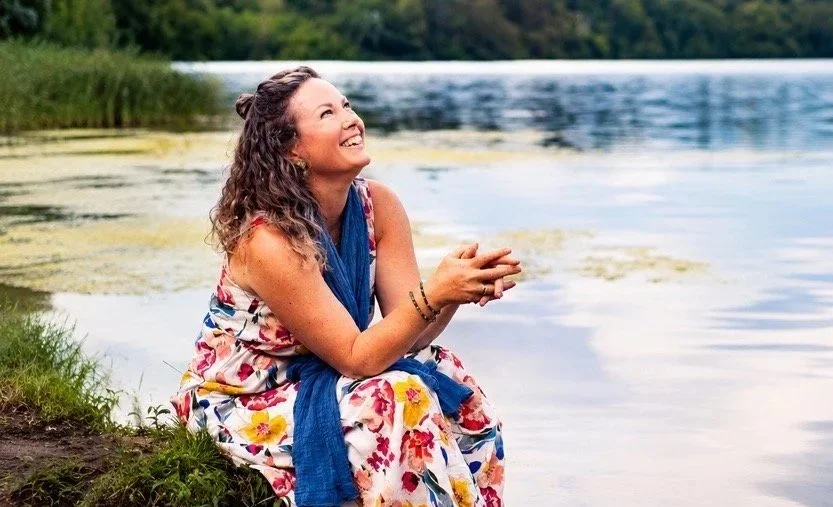
Cassandra Cooper is a Spiritual Guide, Teacher, and Healer with With Love, Cassandra. Based in Hobart, Tasmania, she works with the Modern Mystery School, sharing ancient teachings and practical tools for self-discovery, personal transformation, and the Path of Know Thyself. Cassandra welcomes students from across Australia and beyond.
Want to know more about how to get involved?
Book a 30min Alignment Call